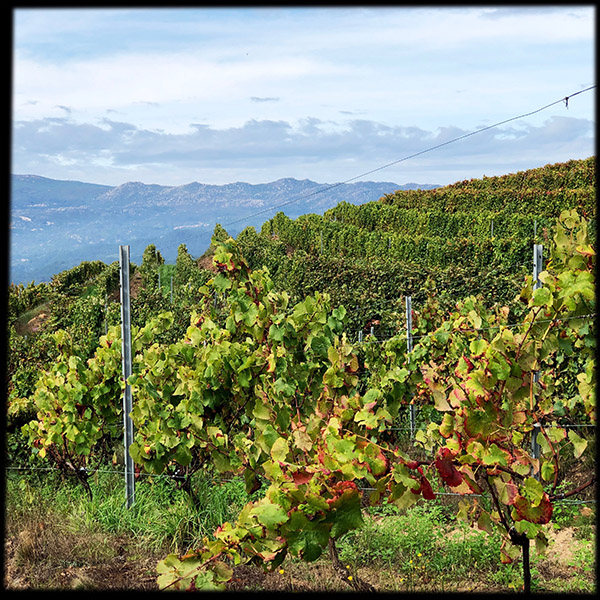
The 2023 harvest has been very challenging in many regions in Spain. It reflects the current reality of warmer and drier weather, a harvest with an early start, but also crazy weather, so people had to stop and start again multiple times because of weather changes, torrential rains and heat waves. I had to taste the current releases from Galicia right in the middle of such harvest, which some have defined as the most challenging of their lives. It proved a challenging task. During COVID-19, when everyone was home and had time, I was able to taste one appellation per week, but this time, it was almost the opposite. People were crazy, running up and down like headless chickens. But I managed…
Time for a Little RantI’m not too optimistic when it comes to global warming, climate change or whatever you want to call it. It’s a reality that seems to be accelerating. More and more we have the wrong weather at the wrong time of the year, and everything is getting more and more extreme. And what is worrying is that politicians rarely pay any attention to it. Politics is, by definition, a short-time matter. Important matters are medium and long-term ones. How are politicians going to be interested in the important stuff then? They are focused on the mundane, the short time, their mandate…
Agriculture is getting more and more challenging, and we should not forget that wine is an agricultural product. We human beings have a complete dependency on agriculture, livestock and fisheries, three trades that are being mistreated to incredible extremes. They are the base of our nourishment, but still, we don’t take them seriously and we ignore their problems, environmental, economical or whatever. I’m going well beyond wine here; I’m talking about survival… Maybe I’m getting too extreme, but these are things that we need to keep in mind.
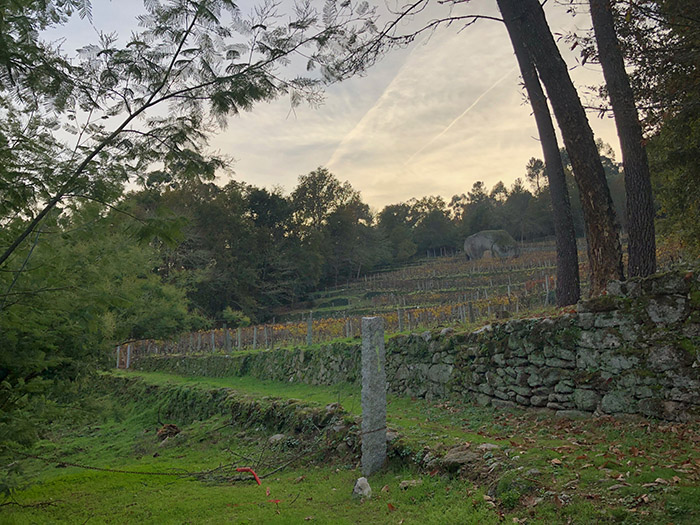 The O Penedo Vineyard from A Barouta, with mimosa in the foreground
One new challenge, due to globalization and also probably to climate change, is the arrival of new pests (as if we didn’t already have enough!). The Asian hornet Vespa Velutina, a predatory wasp, arrived in Spain in 2010 and has been spreading throughout the country ever since. This is the first time wine producers in Galicia have mentioned it as one of the new challenges for viticulture in the region. Another challenge that has grown a lot is mimosa, a very invasive plant. Thankfully, they are at least trying to control the expansion of eucalyptus.
Wine might seem a bit banal in this context, but it’s what concerns us here…
I travelled to Rías Baixas, Ribeiro and Valdeorras and met with growers or received samples from Ribeira Sacra and Monterrei and the IGP (Indicación Geográfica Protegida, the category of regional wines) zones of Galicia. I tasted some 500 wines and discovered a reality that I also need to mention. Minifuldio, small holding structure of the land, is a reality in Galicia, which means many wines of just a few hundred bottles, with which I always struggle between interest and availability when presented with a wine for review. Yes, there are groundbreaking wines or great vineyards that produce small quantities that are worth it. But by experience, I know that each barrel in a winery is slightly different and could make a different wine. But we need balance. A couple of thousand bottles and a dozen different wines? This time I discarded some such wines and tried to give more time to wines that can actually be found in the market.
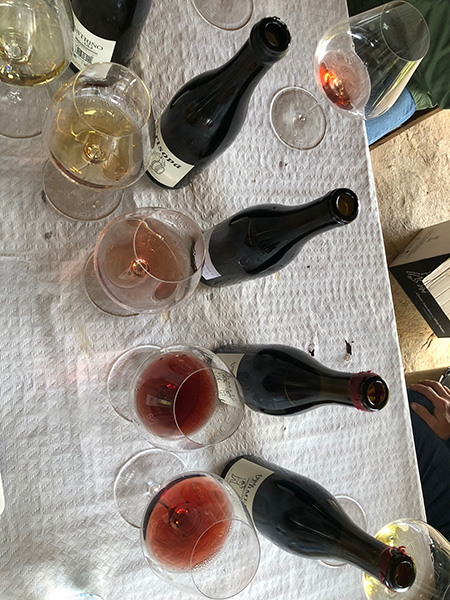
The VintagesThere is a general tendency for warmer and drier years. There is less rain, even in Galicia. And they are having issues with seafood because the temperature of the sea is too warm. Weather patterns are not followed, and it’s increasingly more difficult to hear someone talking about a classic vintage ... maybe 2021? In general, Galicia is experiencing unstable but warm winters and springs and unpredictable summers. And then there’s mildew…
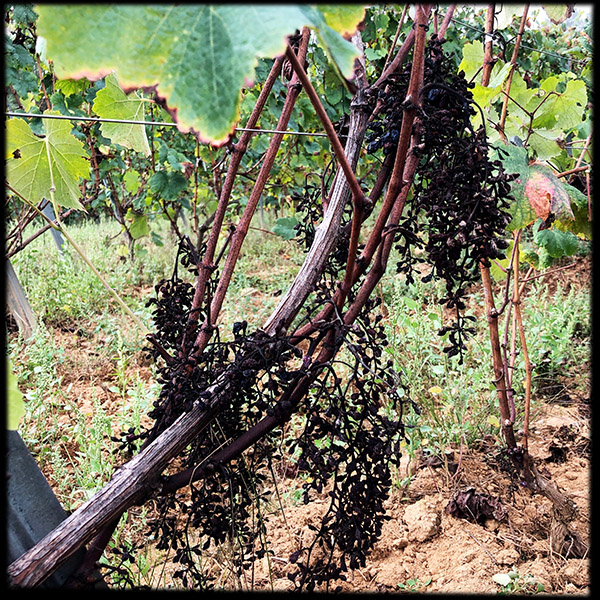 Mildew could be the most challenging problem to viticulture in Galicia. If you don’t control it, your grapes end up like this.
Generalizations are difficult everywhere but even more so in in a large and diverse region where we have very different conditions in the coastal and inland zones. I’ve mentioned the specific weather in many producer notes or individual tasting notes. But we can always give a general idea.
2021 and 2022 represent 66% of the wines I tasted for this article, and they are two very different years. I still tasted a good number of wines from 2020 and then a few wines from past vintages, going back to 2012, as there are some Albariño bottlings from Rías Baixas that are released later. This is a trend that started with the Selección de Añada from Pazo de Señorans, which is superb in the current 2014, and later followed by others, such as Lagar de Besada, with a small project, bottling some wines 10 years after the harvest! Yes, Albariño CAN age!
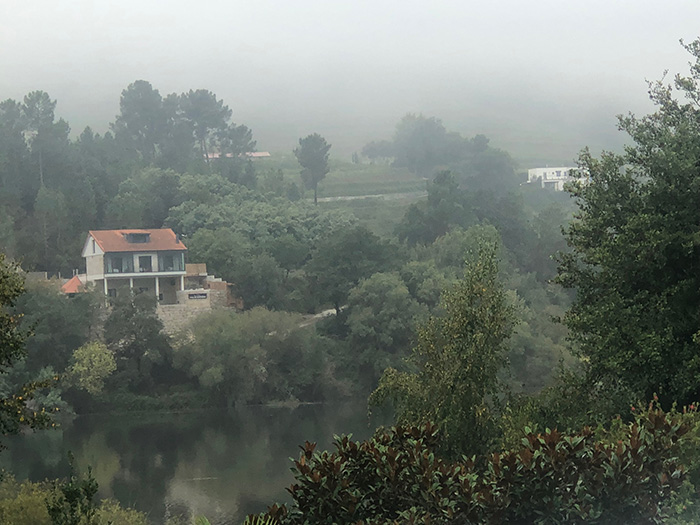
2021 was a very challenging year, cooler, wetter and with pressure from fungus, definitely complex for the reds from Rías Baixas and much better for whites. 2021 and 2023 were very difficult for reds, especially for Caíño. Caíño is a very finicky grape, in wet and cold years it tends to rot before it’s ripe; the skin is very thin and breaks, and the grapes literally fall from the bunch onto the floor. You need to lower the yields, change the training method and get fewer grapes that ripen earlier.
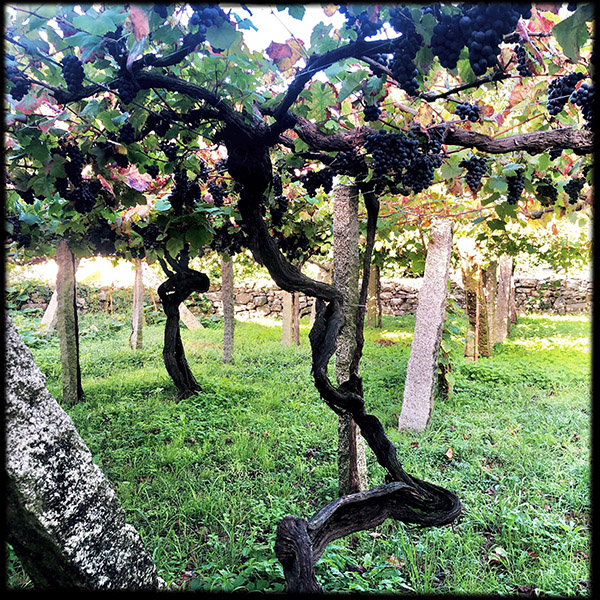 Caíño and most reds in Rías Baixas are often in pergola, but modern thinking is more in the direction of bush vines that will give lower yields and with better ripeness.
2021 is not a homogeneous vintage; some wines are very good, with freshness and depth, and others could not even be bottled. It could be seen as a return to the conditions of yesteryear (a classic vintage … hooray!!). It’s a cold, Atlantic and heterogeneous vintage. A year that separated the wheat from the chaff.
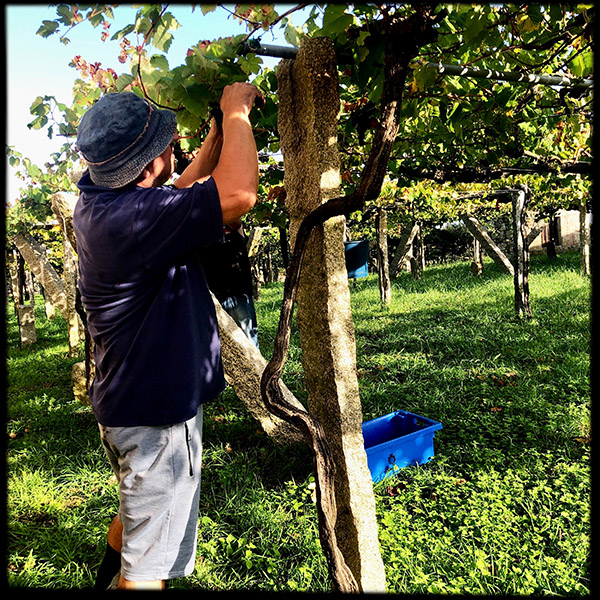 Harvesting in Rías Baixas; no need to bend down!
As for 2022, a warm and dry year throughout Spain, the vintage was not as warm and dry in Galicia as in other regions. Being drier and warmer, the grapes were healthier, and in some instances, the wines are better. Ripening of red grapes is a challenge in Rías Baixas, but that ripeness was achieved in 2022, like it did in 2020. In some cases, the acidity of whites can be too high and the wines too sharp; so, a more complete ripeness might also be an advantage. It’s a more homogeneous vintage, with fewer ups and downs.
M&AThe arrival of large wineries or winery groups from other regions is disrupting land and grape prices. Galicia has, for a long time, been the place most people looked at when it comes to high-quality white wines. In recent times, it started with Rías Baixas, when many wineries from Rioja decided to make their white wine there (or in Rueda). That trend has remained and increased in the last few years.
One of the recent catalysts has been the arrival of Vega Sicilia in Rías Baixas. They have been purchasing vineyards in different zones of the appellation, driving land prices up, and doing trials. I spoke to Pablo Álvarez, CEO of Vega Sicilia, who told me that “no, there’s no commercial wine yet, and there won’t be for some time. We are still learning and doing trials the way we do it. This year (2023), we lost most of the crop to mildew because of a mistake in the vineyards. We are still learning.”
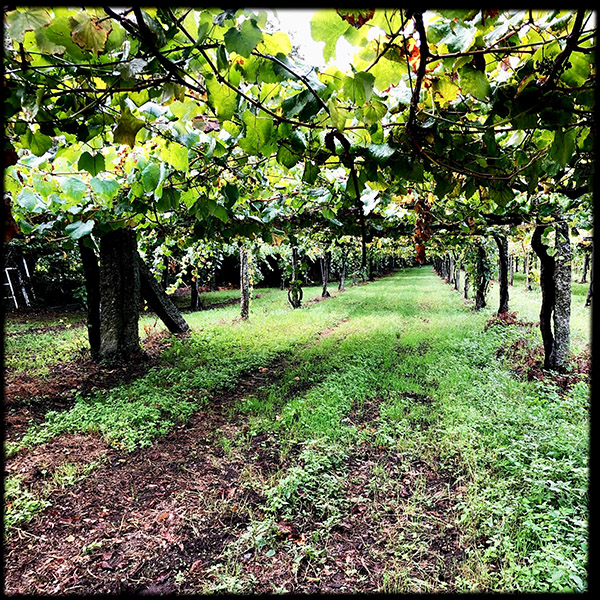 Rías Baixas has always attracted growers from other regions.
Pago de Carraovejas from Ribera del Duero has created its Alma Carraovejas group to acquire wineries and vineyards in different appellations of origin. They arrived in Galicia, purchasing Emilio Rojo and Viña Mein in Ribeiro, and are now closing a deal to buy Tricó, a 50,000-bottle, 10-hectare project in Rías Baixas.
“We have done the 2023 harvest together,” confirmed Pedro Ruiz, CEO of Alma Carraovejas, “and we’re closing some details. It’s not yet done, but it’s close,” he told me. Tricó, or Compañía de Vinos Tricó, is the brainchild of José Antonio López in the Condado de Tea subzone in the south of Rías Baixas touching Portugal, a zone closer to Ribeiro. López was one of the pioneers of the appellation (he was one of the founders in 1986) and is the name behind projects like Morgadío, Lusco, and since 2007, Tricó. Here his objective was “to produce age-worthy wines and put an end to the myth that Albariño is a short-lived wine.”
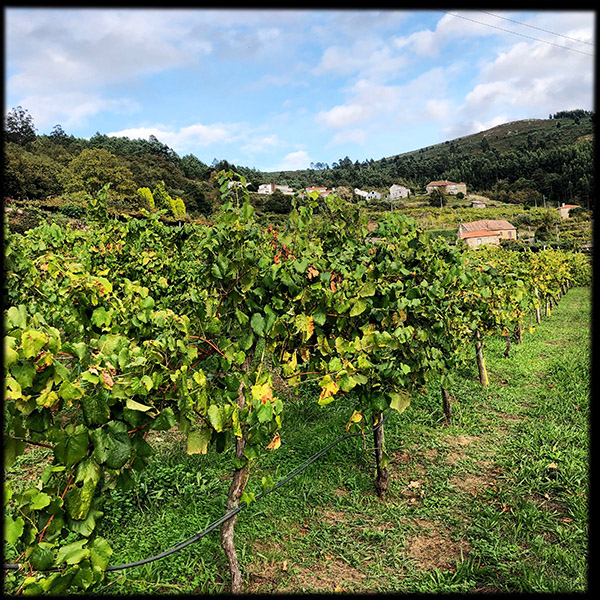
In Ribeiro, Ribera del Duero’s Matarromera has purchased Sanclodio, the winery of the late film director José Luis Cuerda in the Avia Valley.
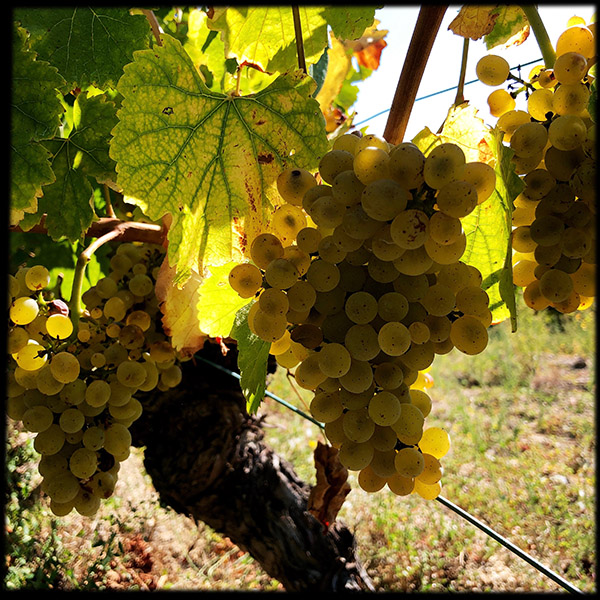 Godello grapes in Valdeorras
Valdeorras and the Godello grape have been the center of attention for many from Rioja and Ribera del Duero too, but the appellation could not provide the volume some were after. They were diverted to Bierzo, where the prices for the white grape have things upside down, with fruit from young, irrigated vines achieving a higher price than old-vine, dry-farmed quality Mencía.
That’s if you’re talking about white wines, but when it comes to reds, I hear many rumors concerning Ribeira Sacra, which I guess might turn into reality in the following years. I’ll keep you posted… Let’s take a look at the highlights or news in the different regions now.
Rías BaixasI still tasted more wines from the Rías Baixas zone than from any other zone in Galicia, and the whites, mostly Albariño, are still the main category here. But reds keep growing and were already 21% of the wines I tasted from there.
And speaking of reds, we all thought Caíño was THE grape, but the understanding and improvement of Espadeiro makes me believe it can be even finer and more elegant that Caíño. The one wine that changed the tendency was the Castiñeiro Espadeiro from Eulogio “Locho” Pomares, winemaker and from the family that owns Zarate. The Fabaiños from Fulcro soon reinforced that idea.
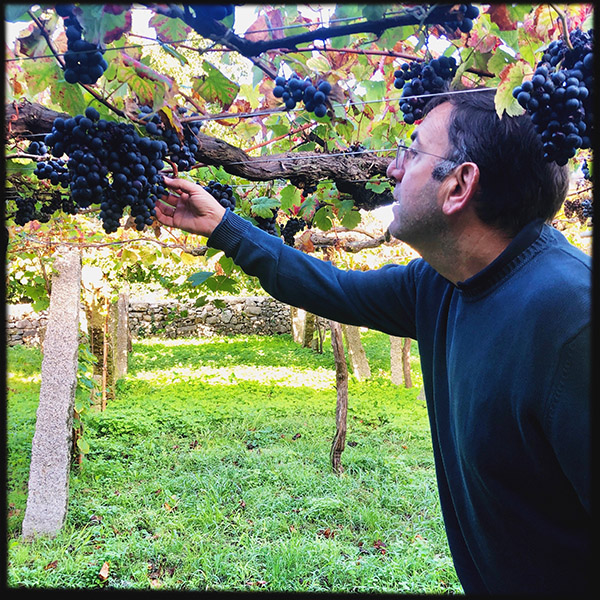 Eulogio “Locho” Pomares from Zarate
As for new or newish names, Pazo da Sinsela in Sisán, Ribadumia, is a property very close to the Umia River that has some three hectares of vines. It is a new joint venture of Rodrigo Méndez and Raúl Pérez, who rented the vineyards and winery in the property for 20 years. They only produce wines from the grapes from the property. The first vintage was 2021, and they got low yields, a total of 7,000 bottles, but they hope to reach 15,000 bottles when they get the vines to full speed. They have silty soils that keep the humidity and freshness.
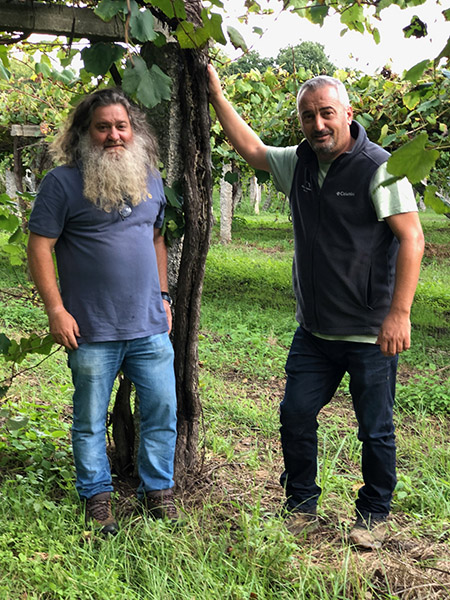 Raúl Pérez (left) and Rodrigo Méndez (Forjas del Salnés), the people behind Pazo da Sinsela, with the old vines of the property
I had very good references and therefore high expectations for the wines from Veigamoura, and they didn't disappoint me! It’s a small project from Antonio “Toni” Alonso in the Condado zone of Rías Baixas, in the village of Arbo. He has four hectares of vines in Mourentán (Arbo), one-third of them over 30 years of age and the rest over 20 years old. They are located in an old granite quarry on the slopes of a mountain at 280 meters above sea level. The soil is sandy loam with granite flakes from the quarry waste. The vines are trained on trellises, with Royat cordon pruning and with a northeast-southwest orientation, and yields are below 5,000 kilos of grapes per hectare. Total production is 8,500 bottles of wine per year.
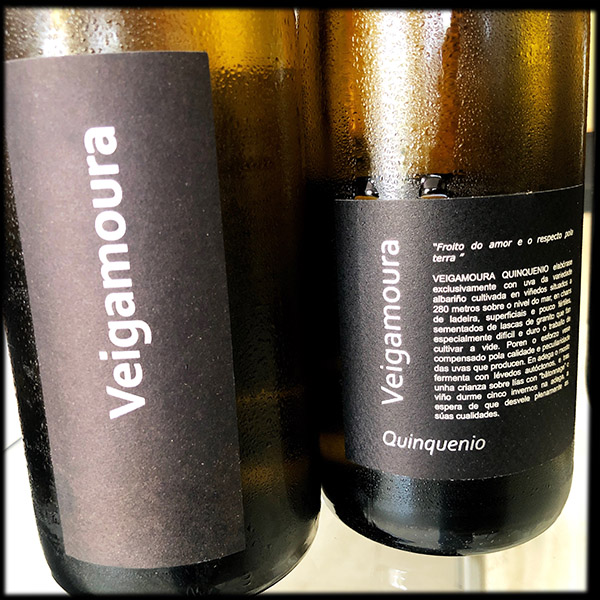 Stunning Albariño from Veigamoura
One project that caught my attention from the first vintage (2020) has been that of José Manuel Domínguez Torres, better known by his wine name, Xesteiriña. He works with Adrián Guerra (ex-Bagos wine bar in Pontevedra), who was also involved in the creation of the cuvée 69 Arrobas from Albamar, one of my favorite whites from Rías Baixas, which was stunning in the 2021 vintage. Xesteiriña pretty much follows the idea of 69 Arrobas but with grapes from José Manuel’s vineyard around his house. Having tasted and drunk the first release, I was eager to meet José Manuel and visit his vineyard.
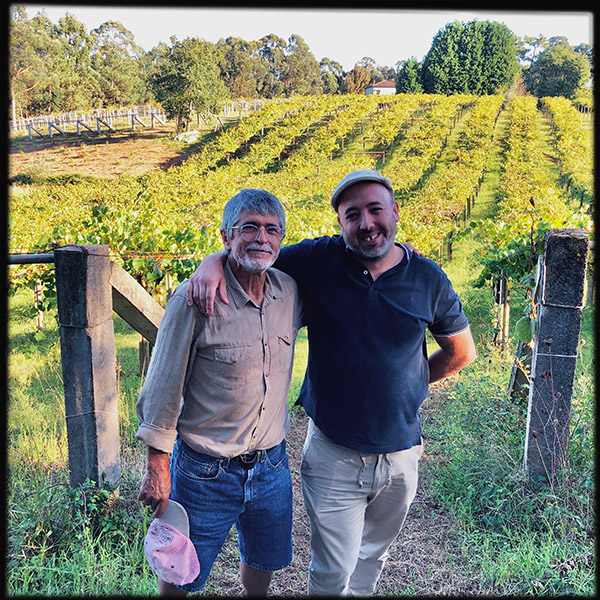 Jose Manuel Domínguez (left) and Adrián Guerra
He built his winery next to his vineyard in 2022; in the past, the wine was vinified in rented space at Albamar. He works 1.1 hectares of vines, 0.8 of them planted 38 years ago and the rest eight years ago. In 2021, he experimented with a small cuvée without any added sulfur, and in 2022, he produced all the wine that way. There are more wines in the pipeline; he's planting a little bit of red and also buying some grapes to make a white and a red with a second brand.
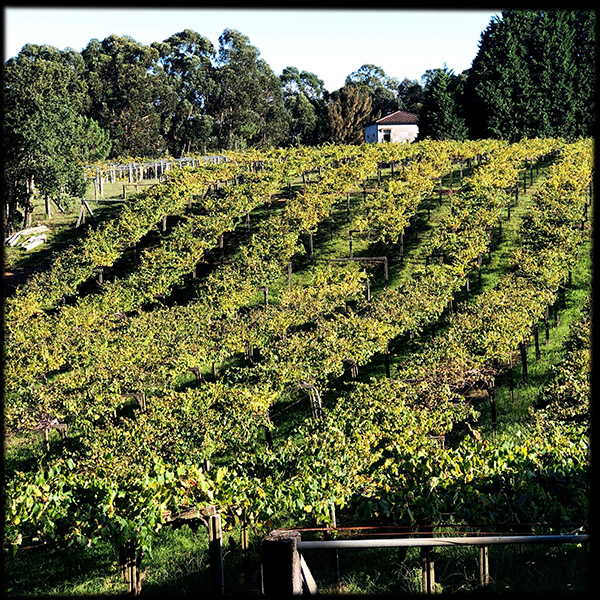 The Acios da Xesteiriña vineyard
ValdeorrasI went back to visit Rafael “Rafa” Palacios in Valdeorras, which I had not done for a decade. He has expanded his winery, which now looks state of the art, and of course his vineyards, close to 40 hectares now, but he still buys grapes from local growers. In 2022, he processed 400,000 kilos of grapes. We went to the vineyards, did a good tasting and discussed the latest vintages.
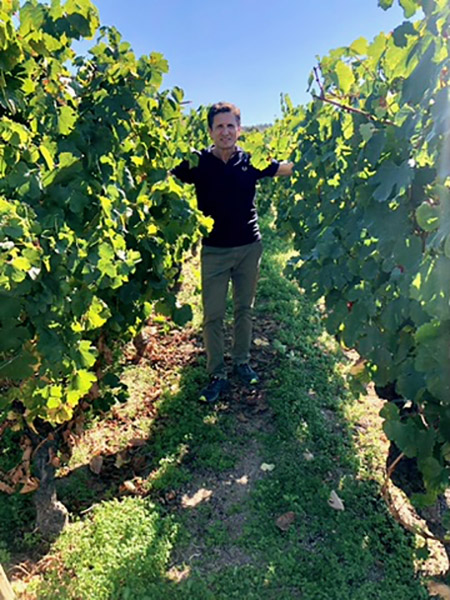 Rafa Palacios in his O Soro Vineyard
2021 was a cooler year of lighter wines with freshness, and even though 2022 was a warm year, the wines kept freshness that he cannot explain. As for 2023, it has been a very challenging year, with a heat wave that burned some of the grapes and a long harvest after a turn of the weather with abundant rains that brought some challenges. In 2024, he will do his 20th harvest in Valdeorras and the 20th vintage of As Sortes.
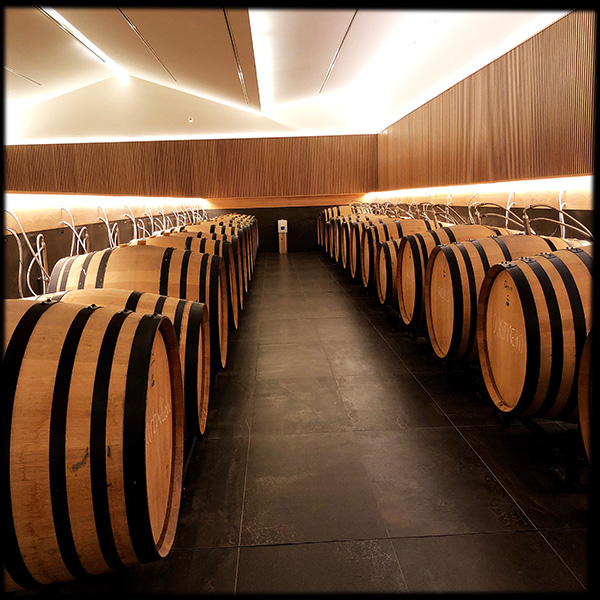 The new winery from Rafa Palacios is state of the art for the production of precise, delineated and elegant whites.
The wines have freshness and saline minerality that often transcends the vintage and even the variety, due to the high altitude of O Bolo village and the decomposed sandy granite soils. He's one of the finest white wine producers in Galicia and in Spain.
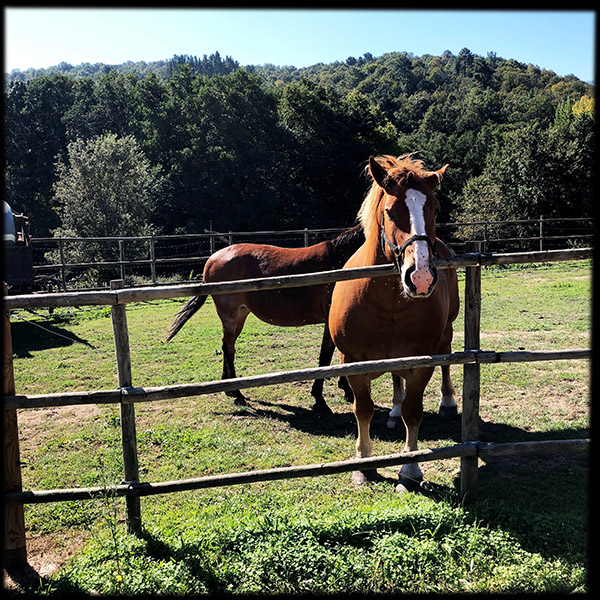 Some of the vineyards are now worked with horses.
I visited the impressive project CVNE has in Valdeorras. They started buying a winery, Virgen del Galir, with some 20 hectares of vines in the village of Éntoma on schist and slate soils. They have planted a further 20 hectares next to the original ones, building terraces that resemble those from the Douro in Portugal (they were built by Portuguese people!), which included the soils.
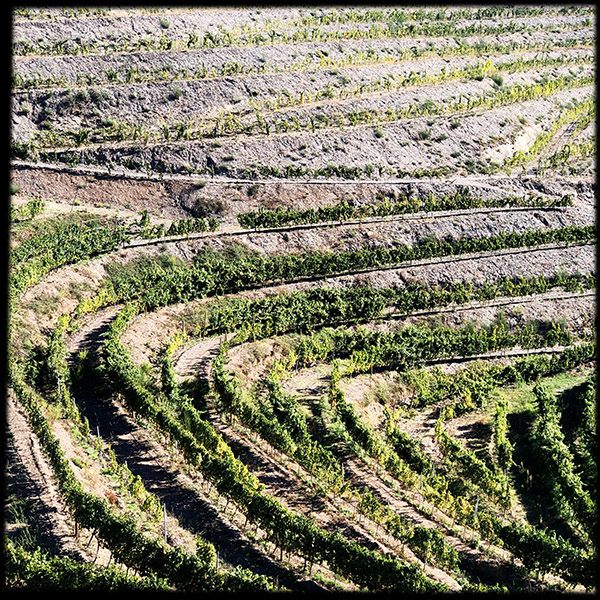 The A Malosa 40-hectare vineyard from Virgen del Galir reminded me of the Douro in Portugal (or Ribeira Sacra!).
They have also branched into the zone of As Ermitas in the Bibei Valley, where the soils are granite based. They have structured their portfolio as follows:
- Maruxa are village wines from Éntoma, varietal wines from purchased and their own grapes.
- The Val do Galir white is from their A Malosa Vineyard in the Galir Valley, the red not yet, but eventually it will be. A Malosa should, in the future, produce more wines when the new plantings are in production, as it’s a very large vineyard, 40 hectares in total.
- Single-vineyard wines.
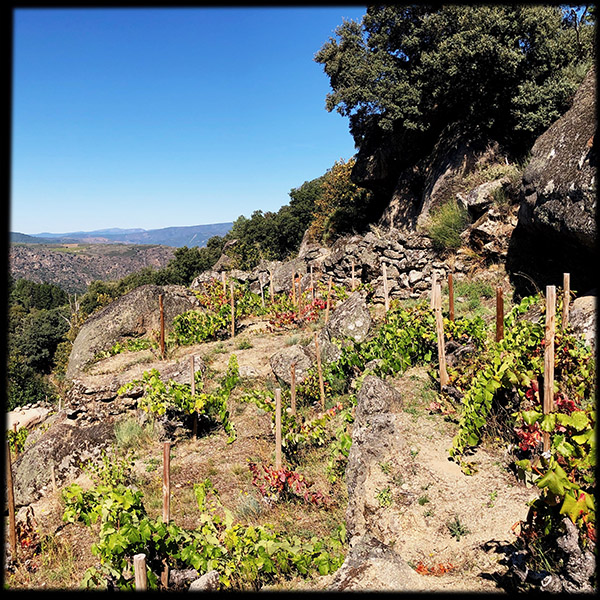 The old vines on granite soils in the zone of As Ermitas in the Bibei Valley of Valdeorras resemble the landscape of Gredos.
The wines are getting better each year, irrespective of the character of the vintage, a sign of a winery on its way up.
One name from Valdeorras that tends to fly under the radar is Viña Somoza, with Javier García from 4 Monos in Gredos in charge of the wines. They have been growing in quality and quantity and putting even more focus on red wines. The whole range is highly recommended, but the pale and delicate Brancellao varietal 2016 Alma do Vello Tesouro stole my heart with its ethereal personality.
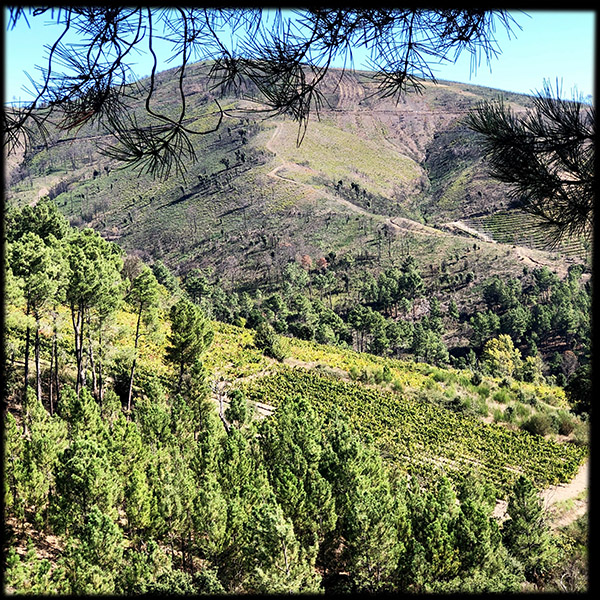
From the Ribeira Sacra zone, I still tasted more wines without appellation than with it, and that is worrying, especially when close to 70% of the top-scoring wines from the region do not carry the name of the region on their labels. Daterra, the personal project from Laura Lorenzo, who used to be winemaker for Dominio do Bibei a long time ago, has stopped production. Algueira is going through changes and restructuring its portfolio, and I only tasted one wine, which was produced for La Place de Bordeaux. And the new name in the zone is Pablo Soldavini, one of the founders of Fedellos do Couto, later in Saíñas and now with his own personal project.
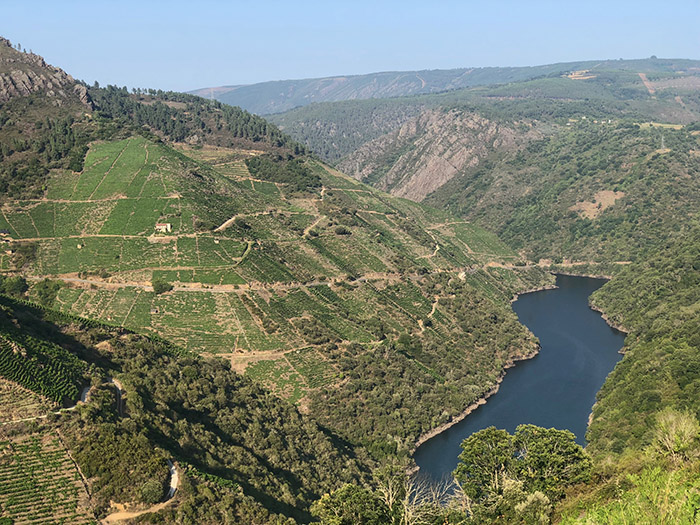 The hypnotic view of the Sil River in Ribeira Sacra
There’s not a lot to say about Monterrei, which should be on my list to visit next time to catch up with Quinta da Muradella and to understand the latest developments at Couto Mixto. More about them in a minute, as there is a link with the region that is my main focus this time, Ribeiro.
RibeiroRibeiro is one of the oldest wine growing regions in Europe. There are documents from the 12th century that speak of the vineyards and wines of what is now Ribeiro (in the old times it was known as Ribadavia, the name of the most important village in the zone). They also mention the great economic importance of wine in the region, the great expansion of vineyards from the arrival of the Cistercians in the 12th century and the importance of the wine trade with Holland and England from the 14th to the 17th century. But like many other regions, it later went into recession.
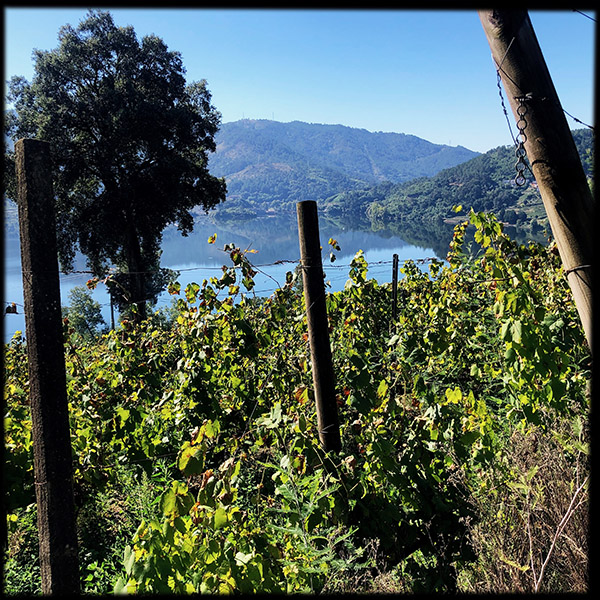
Today the region is struggling; the surface of vineyards gets smaller and smaller, as they are being abandoned, and challenges with the climate, mostly mildew, especially in the last few years, are a big concern. The zone has a big infrastructure problem; there are no hotels and very few restaurants ready to host international customers, which makes enotourism quite challenging.
However, there is high potential in the region, and there’s a small group of growers that work hard to preserve and recover the historical vineyards and local grape varieties (Palomino and Garnacha Tintorera were widely planted after phylloxera almost destroyed the local grapes, or “castes”) and to produce high-quality wines.
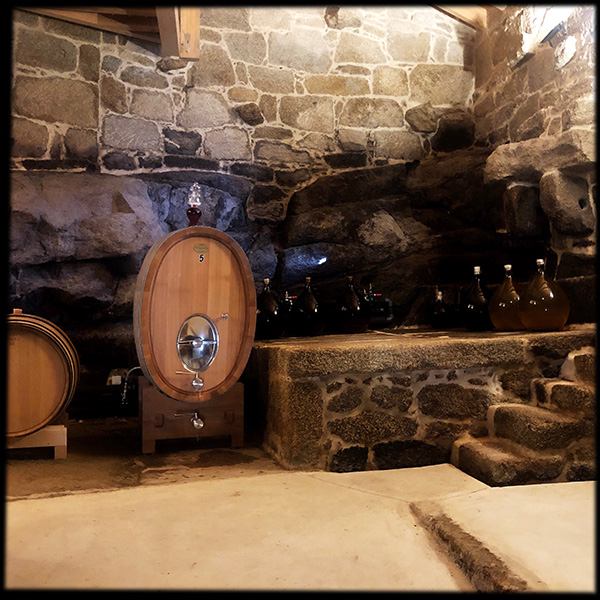 The A Barouta winery
I had a handful of pending visits to projects in the zone, such as the A Barouta project. I had seen the winery and vines before, but I finally tasted the first wines from this joint venture between Javier Alén, ex-owner of Viña Mein, the promoter of the project; Dani Landi and Fernando García from Comando G from Gredos; and their Chilean vineyard manager and cellar master Roberto Núñez. The project was born from their friendship and the experience of working together in Ribeiro in the last eight years as they helped Alén to transform the vineyards and wines of Meín, which was later sold. They wanted to keep their links with the place and continue with their friendship working together in something small.
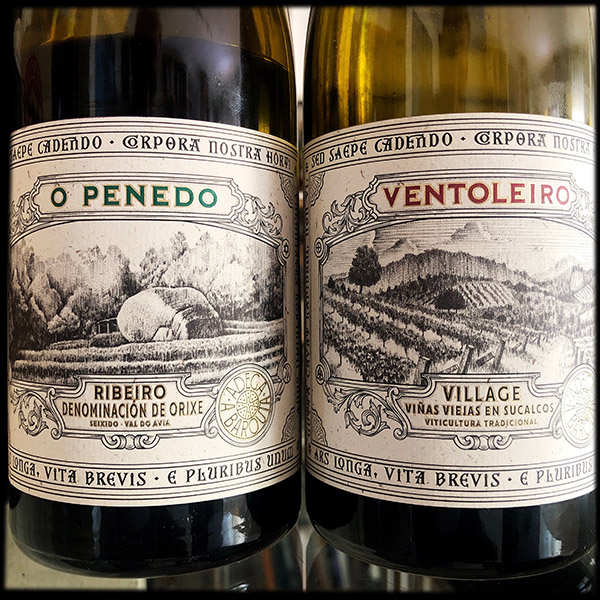 The A Barouta labels are as distinct and unique as the wines.
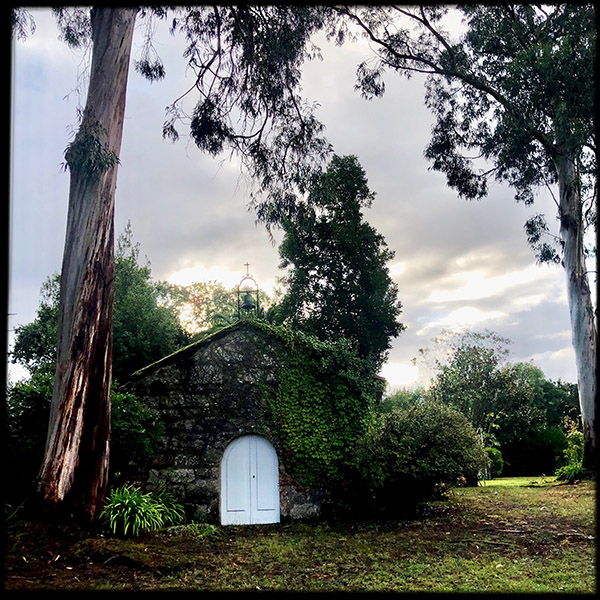
They purchased some old vineyards in the villages of Leiro and Cabanelas. The one in Leiro, O Penedo, is very close to Emilio Rojo and has a big granite boulder in the middle that somehow reminded me of the landscape of the vineyard in Gredos. They also bought an old stone building next to Alén's family house in Barouta, hence the name, and turned it into a very simple and functional winery. There is one white and one red, and the first vintage is 2020; they did the same in 2021, but in 2022, they introduced a new village red and they are searching for the specific place that could produce a single-vineyard wine. Production will remain small, as they only have around 2.5 hectares of vineyards. They started with some 2,000 bottles with the idea to produce between 7,000 and 10,000 bottles per year.
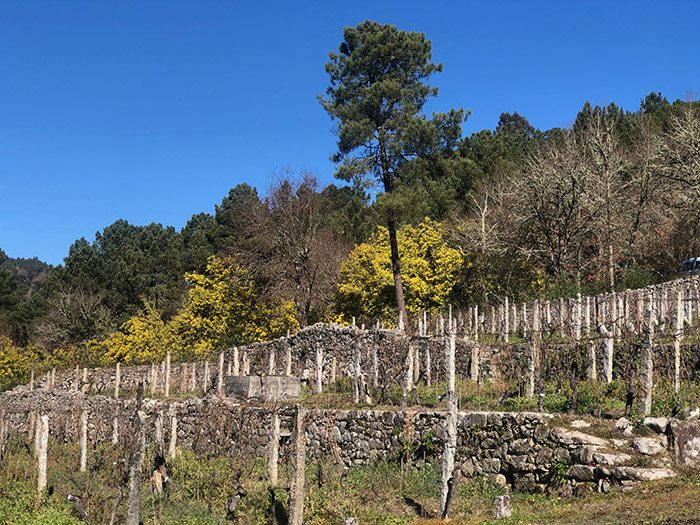 Vineyards in the village of Cabanelas
I also paid an overdue visit to the property of Iago Garrido in Ribeiro, Augalevada. He's regrafting most of the Treixadura, which is what he planted in 2009, mainly to Agudelo (Chenin Blanc) and changing the reds from Sousón to Brancellao and a small quantity of Caíño da Terra (Zamarrica) and Caíño Longo. The négoce line (before Mercenario, from 2022 also called Ollos) is now from local growers that work with him (and he works some of the vineyards himself), which is more what he wanted when he had to resort to buying grapes when he lost his own crop in 2016. The vineyard is certified organic, and he was even certified with Demeter; he keeps working that way but he doesn't seek certifications. Nowadays, he produces a total of 15,000 bottles, and the idea is to reach 20,000, as much as possible from the 2.5 hectares he has planted. Only 30% to 40% of them are in production, as most of the plants have been regrafted.
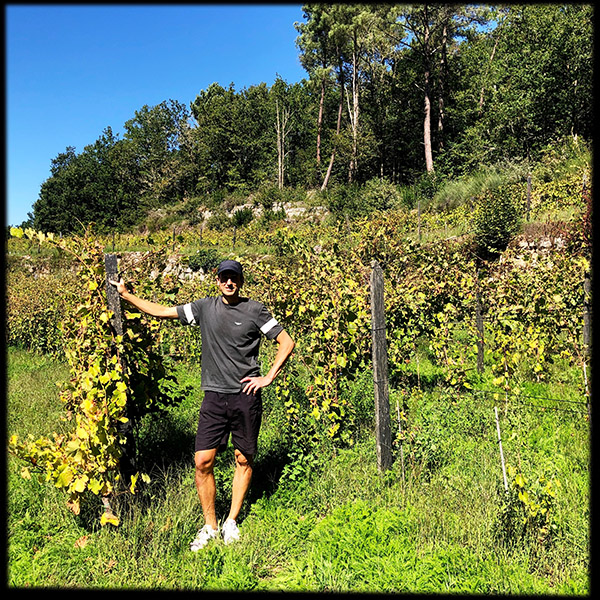 Iago Garrido planted the Augalevada vineyard in 2009.
His amphitheater of vines is isolated from neighbors, which makes it easier to work organically, but he has problems with humidity; there’s a stream that runs through the vineyard, which he buried, but he still has the usual issues with mildew. And now he also has the lack of production, as the plants are being regrafted. He’s getting good results from the use of phosphites as a biostimulator and fungicide for the vines, something I hadn’t heard until now.
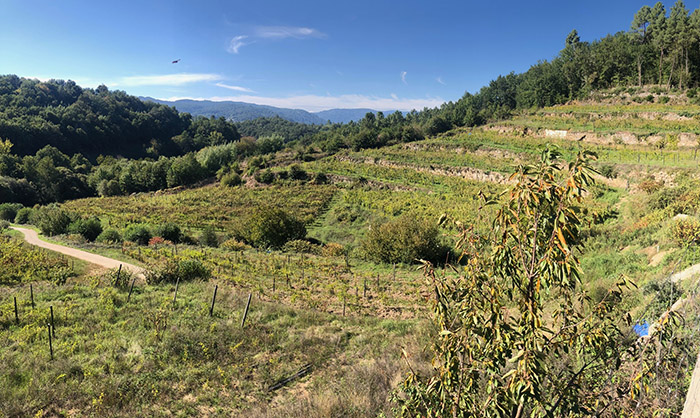 The Augalevada amphitheater of vines
I also visited Cume do Avia, a very romantic family project that is driven by brothers Diego and Álvaro Diéguez Collarte, who have close to nine hectares of vineyards, which they planted in a special place where they family originated, Eira de Mouros. They started the hard way, planting the vineyards between 2008 and 2015 in a place with great diversity of soils and about 120 meters’ difference in altitude. They planted 14 different native varieties in three different patterns. They have been certified organic from the beginning; it was one of the pillars of the project and they also applied many biodynamic practices.
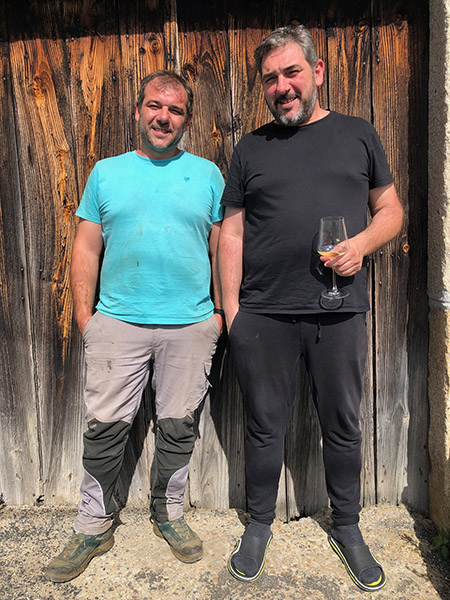 Brothers Álvaro (left) and Diego Diéguez Collarte from Cume do Avia
2021 and 2022 are very different vintages for them. In 2022, there was a heat wave and a warm and dry summer, a healthy crop and plenty of flavors in the wines that had lower acidity. 2021 was a challenging year, rainy and cooler, with mildew. Mildew is the biggest problem in the zone, which also hit in 2023, as I could see in the vineyards, with lots of dehydrated bunches lost to the pest. 2015, 2019 and 2022 were healthy vintages, and 2016, 2018, 2020, 2021 and 2023 were years of mildew. They are experimenting with whites without malolactic; there was full malolactic before, but now they are going for a little more ripeness and avoiding malolactic.
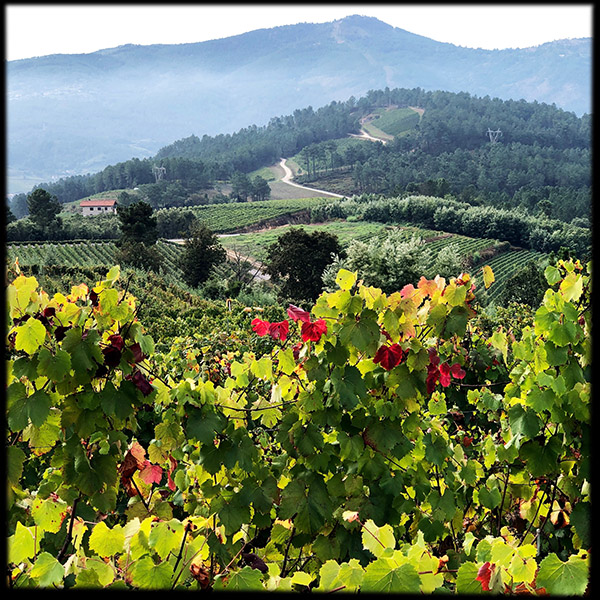 The Eira de Mouros Vineyard from Cume do Avia
I’ve known Marcial Pita for 20 years, from the time when he was studying in Madrid. He later created Bodegas El Linze, which produced wines with grapes from Tierra de Castilla and later also from Bierzo. It was much later, in 2011, that he started El Paraguas in Ribeiro with winemaker Felicísimo Pereira, after going back to Ferrol, his hometown. In 2013, he planted 0.25 hectares of Blanco Lexítimo, or Albarín Blanco, on granite soils in the parish of Esmelle in Ferrol, a zone outside the appellations of origin but with great tradition for Atlantic, cool-climate wines that fight against rain and salty winds. The first time he was able to make a commercial wine from there was in 2020, Astillero, and there were only a handful of bottles that he vinified in his home garage. I also paid a long overdue visit to Pita to see his home vineyard and the source of their wines from Ribeiro.
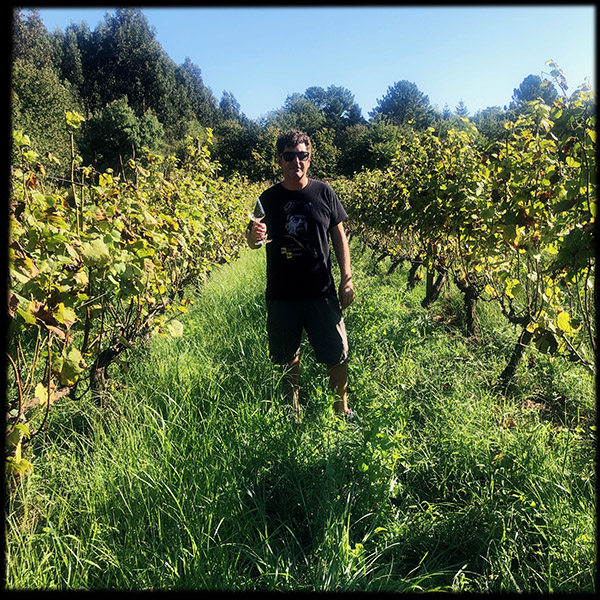 Marcial Pita in the Branco Lexítimo vineyard he planted in Ferrol
Gutier Seijo, ex-Dominio do Bibei in Ribeira Sacra, arrived in the zone in 2015 to produce the Ribeiro wines from the winery. He started his project, Mixtura Independent Wines, in 2018 when he gave up his day job. He restored a winery from the 1950s that had been abandoned for 40 years and started producing wines from the Miño River, independently from the appellations, even mixing origins, looking at the soils.
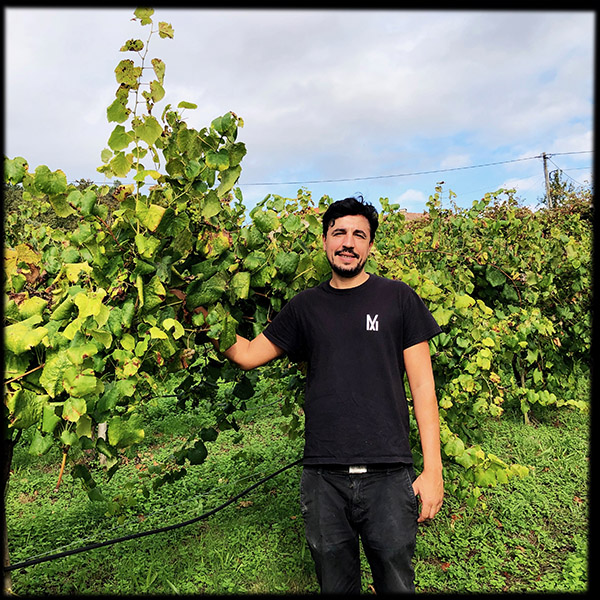 Gutier Seijo works vineyards in the Miño Valley in Spain and Portugal.
He started with 25,000 bottles from 2020, and that's the size of the project, all produced in five Stockinger foudres and five concrete tulips. The wines ferment in foudre, where they age one year, and then they are transferred to concrete, where the white stays for one more year, two years for the reds. He uses only native yeasts, and he only adds sulfur after the fermentation and at bottling. The wines are modern and elegant, like the winery, minimalist, clean and tidy. The foudres were new from 2019, so the wines have some creaminess, but he has the idea to reuse them (almost) forever, so the influence from the oak should diminish over time; it already did from the second year, and it should eventually disappear.
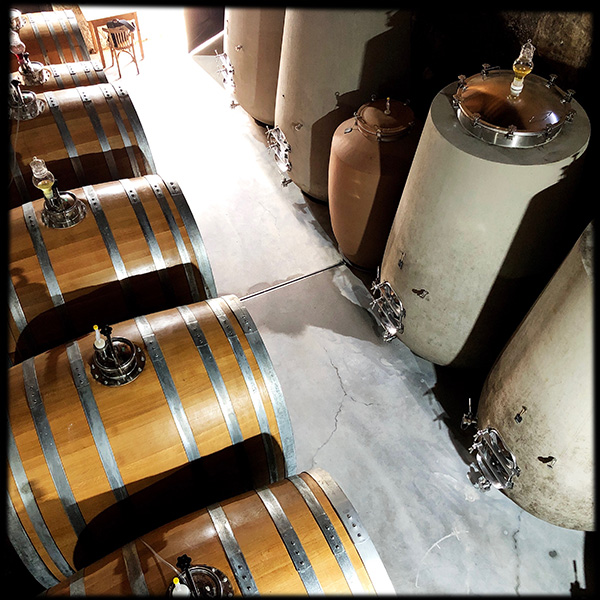 The Mixtura Independent Wines winery
He has wines that blend grapes from different appellations and even countries, as the Miño Valley divides Spain from Portugal; so, the wines are legally from Europe, but for practical reasons, I marked them as Galicia. The Mixtura range seeks more precision and terroir, and the Mix range is for more hedonistic wines. The names and labels are difficult to identify, as it's only the color of a corner of the black label that tells them apart, but he's working on solving that. It’s an intriguing, interesting conceptual project, (mostly) in Ribeiro.
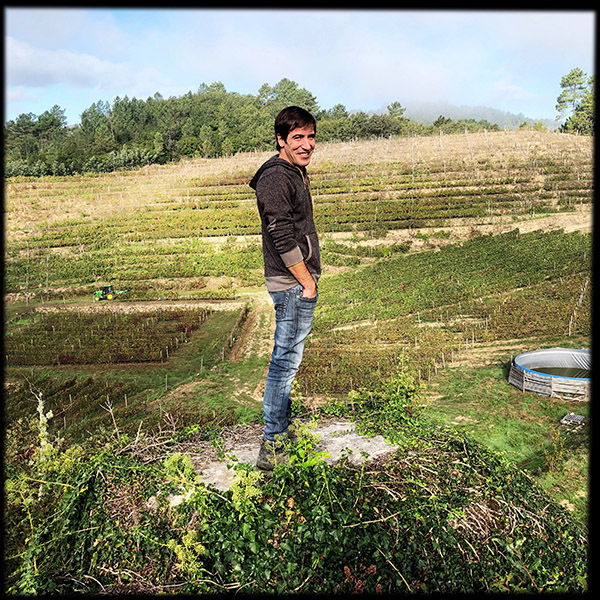 José “Pepiño” Pereiro López-Quecuty in the vineyard he planted
José Pereiro López-Quecuty, “Pepiño” for short, is a disciple and friend of Raúl Pérez, from whom he learned most of what he knows after finishing his studies. His life project is Viñedos do Gabián, 3.3 hectares that he planted in a historical place in Carballeda de Avia, a complex piece with different expositions, altitudes (up to 250 meters above sea level), textures and varieties, mostly reds, mainly Brancellao and Caíño. He thinks Ribeiro in the past was mostly red, and it's his approach. He has also planted some white varieties in his vineyard and might do some trials, but he sees the future in red. He produced no wine in 2014, 2018 or 2021 but was happy with the result of 2022.
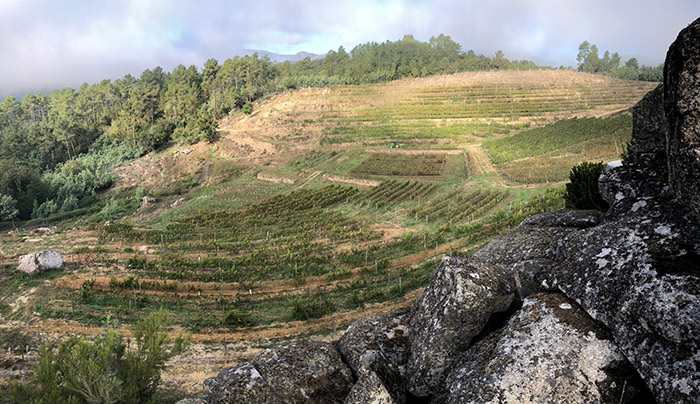 Getting 3.3 hectares of granite slopes to produce grapes can be a herculean job.
Although 3.3 hectares might seem small, let me tell you, cleaning and preparing the land, planting it and making the project sustainable is titanic work. It’s doing things the hard way, as it takes years to sell any wine if you start by planting the vines first. And he’s made it. Cheers to Pepiño for that!
The MasterI had been following the work and wines from Bernardo Estévez since the 2011 vintage when I happened upon his wine, then called Issué. I was very impressed and intrigued. This is how I described him at the time: He was a car mechanic in Vigo who planted his first vineyards in 2001. In 2008, he moved back to Arnoia to work full time in his vineyards. He started taking control of old family vineyards and dedicated five years to learning natural and biodynamic agriculture in Portugal and Ribeiro. In 2009, he created his colleiteiro winery with two hectares of vineyards ranging from 14 to 100 years old on slopes in the San Vicente and San Amaro valleys from A Arnoia. He ferments and ages the wine in 500-liter oak pipas (like they use in Port).
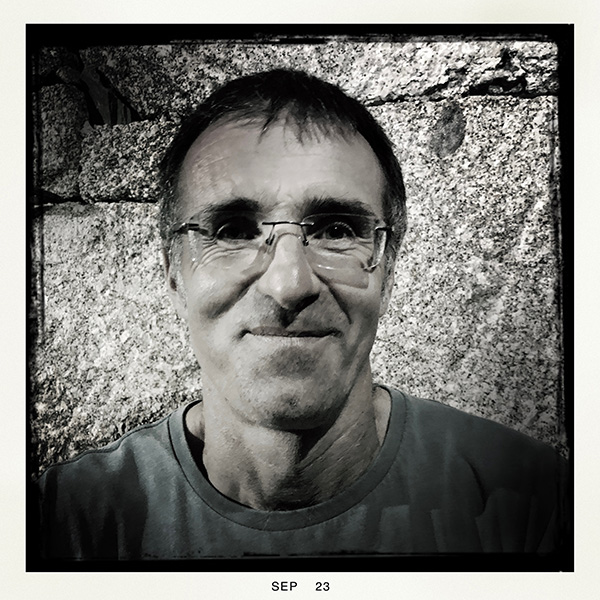 Bernardo Estévez, a farmer very concerned about nature
He was initially very reluctant to have his wines reviewed, and getting him to send me samples was a real challenge. That and the fact that his production was very small. Through the years, we had very interesting conversations via email, but we never had the chance to meet. And then there was COVID-19…
I finally had the chance to visit him in 2023. He, who considers himself a farmer and is very concerned about the environment, has to be one of the best true vignerons in Spain. His way of looking at wine is “always to look at the place where those vines live, where those grapes are raised; look at the people who work and take care of that land,” he told me. “For me, it is as important how this whole cycle develops as the final result, the wine. Wine is important, but even more important is the commitment with nature and what we want to leave for future generations.”
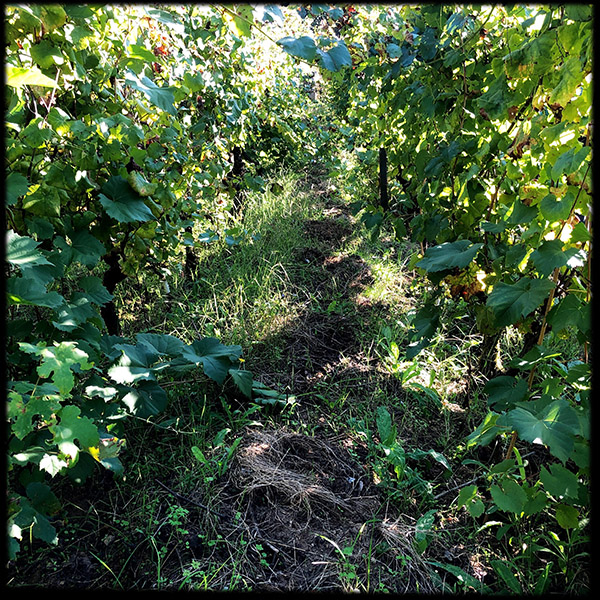 Estévez works the canopy to give shade to the soil.
He works as manually and as organic, biodynamic or regenerative as you might want, but he goes beyond labels or dogmas, trying to understand nature and soil. He’s following the philosophy and working with people like the Colombian guru of organic farming Jairo Restrepo, Mexican Nacho Simón or Spanish Orkatz Pagola, three masters of regenerative agriculture. “We are looking for solutions for the serious imbalances that these sudden changes in climate cause in the vineyards. The problem with this system is that it is not simple and requires several years of learning and also several years until you can see results and get the soils and plants to enhance their qualities and immunity,” he told me. From 2015, his wines are called Cháns e lus, “soils and light” in the Galician language.
He works three hectares of vineyards in multiple micro plots, and those are the only source of his income. In the last few years, he has produced an average of 5,000 bottles per year; in a good year, he might make 7,500 bottles, but in a difficult one, he only gets 1,500. The last few years have been very challenging, he has not been able to produce his old-vine cuvée since 2019, the last “good” vintage when he produced a red, a white and the old-vine white. In 2020, he only produced one light red, mixing white and red grapes, as he lost 90% of the crop, “mostly to mildew.” In 2021, he only produced a white, which is stunning, his finest wine to date, with a lot more contained ripeness than in the past, less heavy, an expression of the granite soils, which is a lot clearer in cooler years. In 2022, he replicated the expedience of 2020, mixing all the grapes of both colors into a single wine, and in 2023, there will only be red, some 2,500 liters in total. But, he’s positive. “We are making great advances and we’re close to finding a solution. But the process is slow and painful.”
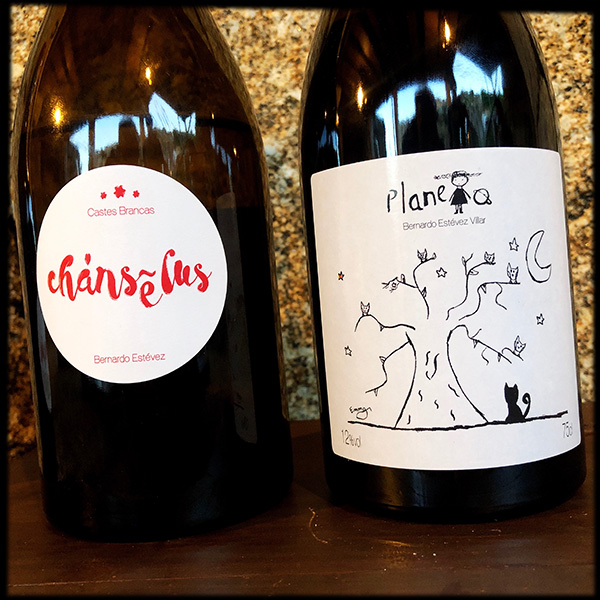 The bottles from Bernardo Estévez might be scarce and hard to find, but they’re well worth the effort.
He also has a new joint venture with Xico de Mandin (Couto Mixto) from Monterrei that started as an informal collaboration four years ago, and then they started a project together sharing biofertilizers, studying the microbiology, etc. He helped to vinify the 2021s that I tasted with him, and there is a great improvement in the wines, which are fresher and less rustic than ever. Then, they started doing wine together in 2023.
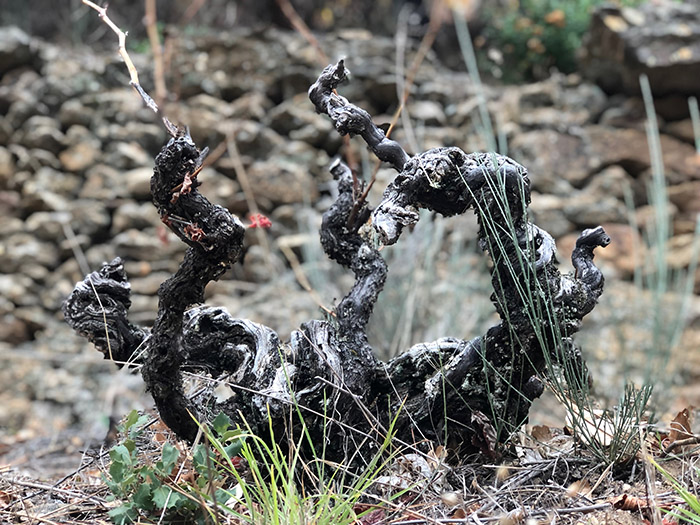
We walked many of his small vineyards, looking at the multiple varieties he’s working with and how he tries to protect the soils from the sun and keep them fresh, to keep moist and regenerate life. He’s fascinated by the huge extension of abandoned terraces and the kilometers of dry stonewall hidden under the forest that reference the gigantic effort from the past to cultivate the land. “You can't even imagine the wine infrastructure hidden in the Ribeiro forests. One day this was a real and vast monoculture of vineyards. The slopes of the different valleys are sculpted in granite by the hands of the farmers.”
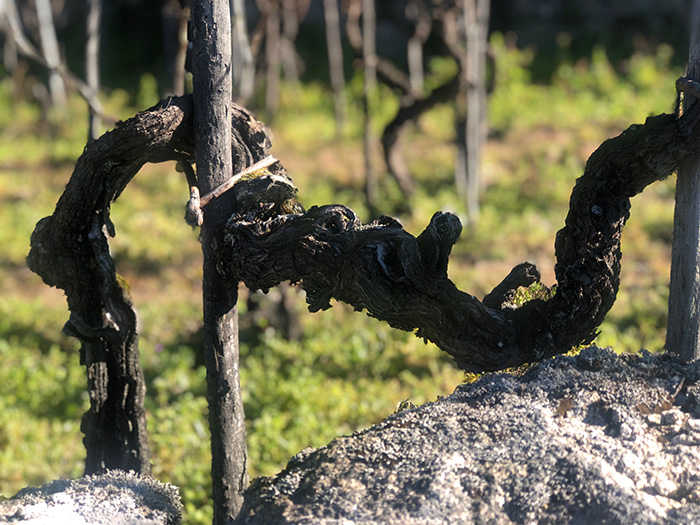
Laura Montero from Emilio Rojo and Viña Mein, who has converted Emilio Rojo to organic since 2020, summarized the reality quite well when explaining the 2023 harvest. “It has been a very tough year of mildew, the month of June was crazy, but we have survived, much better than the conventional farmers. I think that in Galicia it’s the only possibility for the future, organic, biodynamic or regenerative agriculture, whatever you want to call it, detailed agriculture, being on top of things, to break your back and lose sleep. … We have seen it this year, unless there is a radical change in the way of understanding viticulture in Ribeiro and Rías Baixas, every year mildew will cause more damage. It’s an important debate that must be opened in Galicia one of these days.” Let’s open it now!